We Work Remotely Review (2026)
We Work Remotely is one of the largest remote-only job boards, featuring long-term remote roles from companies around the world. It focuses on full-time positions across engineering, marketing, design, sales, and customer support.
We Work Remotely Review (2026)
We Work Remotely is one of the largest remote-only job boards, featuring long-term remote roles from companies around the world. It focuses on full-time positions across engineering, marketing, design, sales, and customer support.
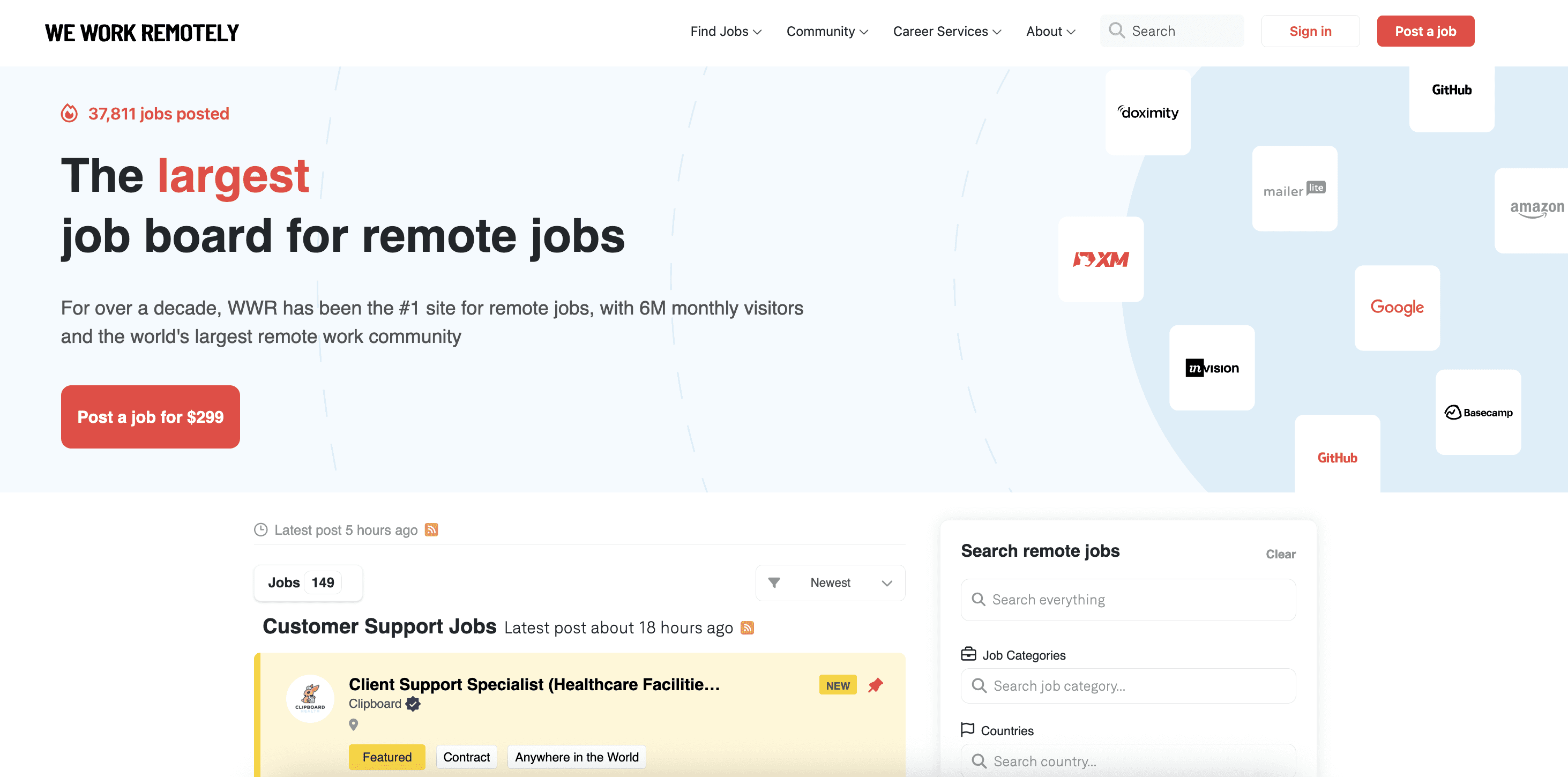
We Work Remotely is one of the original and most well‑known job boards focused exclusively on remote work. Launched in 2011, it’s grown into a massive hub that connects remote professionals with companies hiring for distributed roles across software engineering, product, design, marketing, customer support, operations, and more.
Unlike many job boards that scrape listings from across the web, We Work Remotely only accepts job postings directly from employers, which helps reduce spam and outdated roles. With millions of monthly visitors and thousands of live listings, it remains one of the most popular places to find remote work globally.
One of the platform’s biggest draws is its wide variety of job categories and breadth of companies posting openings — from startups up to larger, well‑known tech and remote‑friendly employers. Many roles include fully remote, location‑agnostic options, though some listings may have regional requirements depending on the company’s legal or tax needs.
Is We Work Remotely Legit?
Yes. We Work Remotely is a legitimate and established remote job board with a decade‑plus track record. It’s widely recognized in the remote work ecosystem and trusted by both job seekers and employers.
Key trust signals include:
More than a decade in operation, with consistent listing growth since 2011.
Employer‑submitted listings, which helps reduce spam and low‑quality roles.
Presence of real jobs from tech, design, product, and support companies — both startups and established brands.
Ongoing updates and community usage across 99% of countries.
Some users in public forums have raised concerns about subscription billing and customer support experiences, which is an important consideration when weighing the platform’s value.
For job seekers, WWR’s long history and direct employer posts make it a credible place to look for remote work, but it’s crucial to understand how access works before signing up.
Key Features of We Work Remotely
Employer‑Submitted, High‑Quality Listings: Every job on the board is posted directly by a hiring company, which significantly reduces the number of spam or misleading listings compared with aggregated boards.
Wide Range of Remote Roles: Jobs span software engineering, design and UX, product and project management, marketing, customer support, operations, and more — giving job seekers ample choice.
Clean, Simple Interface: The site’s layout is straightforward and minimal, making it easy to browse by category or search via keyword. This simplicity appeals to many users compared with cluttered or ad‑heavy job boards.
Company Insight on Listings: Most job posts include helpful context about the employer and role, which gives job seekers a clearer picture before clicking through to apply.
Newsletters and Alerts: While browsing and applying requires an account, WWR also offers email alerts to keep job seekers up to date on new listings in their chosen categories or regions.
We Work Remotely Pricing: Free vs Paid Access
Here’s the key difference compared with many other remote job boards: WWR requires a paid job seeker subscription for full access. According to the official job seeker FAQ, to browse and apply for remote jobs on the platform you must create an account, and that account requires a pro subscription.
Introductory Rate: New job seekers can start with a discounted first month (e.g., ~$2.95).
Subscription Renewal: After the initial period, the plan renews at a higher monthly rate (e.g., ~$14.95/month), billed as part of a 12‑month membership.
Commitment: The subscription covers an annual term, though you can cancel at any time — your access continues through the end of the payment term.
This subscription model is tied to the platform’s “Job Seeker Pro Subscription,” which unlocks full browsing and application capabilities on WWR.
It’s important to note that job seekers are never charged by employers and no payment is required to get hired by a company — the fee is strictly for platform access.
Pros and Cons of We Work Remotely
Pros
Long‑standing reputation in the remote job community.
Large volume and variety of remote job listings.
Employer‑submitted posts reduce spam.
Clean, easy‑to‑navigate interface.
Helpful job category segmentation.
Cons
Subscription required for full browsing and applying (unlike most boards where browsing/applying is free).
Some users report concerns about subscription cancellation policies and billing experience.
Filtering options are basic compared to niche boards.
Competition for top roles is high due to platform popularity.
Who Should Use We Work Remotely?
We Work Remotely works best for professionals who:
Are serious about finding full‑time or contract remote work.
Want access to a large, reputable board used by many established and startup companies.
Value direct employer listings rather than aggregated scraped posts.
It may be less ideal for readers who:
Are seeking only free access without a subscription.
Need highly granular filters or niche roles not well covered by general boards.
We Work Remotely Alternatives
Not sure this is the right fit? Check out more remote job boards to compare features and job types.
So, Is We Work Remotely Worth It?
Yes — but with nuance. WWR remains a trusted and widely used remote job board with a large, employer‑submitted job catalog and a strong reputation. Its subscription model for job seekers is a departure from many other sites, but if you value a centralized, high‑traffic destination for remote openings and are willing to invest in access, it’s a resource worth considering in your job search arsenal.
Bookmark We Work Remotely, set up tailored alerts, and pair it with other curated boards like NoDesk or Remote100K to cover both breadth and depth in your remote job hunt.
We Work Remotely is one of the original and most well‑known job boards focused exclusively on remote work. Launched in 2011, it’s grown into a massive hub that connects remote professionals with companies hiring for distributed roles across software engineering, product, design, marketing, customer support, operations, and more.
Unlike many job boards that scrape listings from across the web, We Work Remotely only accepts job postings directly from employers, which helps reduce spam and outdated roles. With millions of monthly visitors and thousands of live listings, it remains one of the most popular places to find remote work globally.
One of the platform’s biggest draws is its wide variety of job categories and breadth of companies posting openings — from startups up to larger, well‑known tech and remote‑friendly employers. Many roles include fully remote, location‑agnostic options, though some listings may have regional requirements depending on the company’s legal or tax needs.
Is We Work Remotely Legit?
Yes. We Work Remotely is a legitimate and established remote job board with a decade‑plus track record. It’s widely recognized in the remote work ecosystem and trusted by both job seekers and employers.
Key trust signals include:
More than a decade in operation, with consistent listing growth since 2011.
Employer‑submitted listings, which helps reduce spam and low‑quality roles.
Presence of real jobs from tech, design, product, and support companies — both startups and established brands.
Ongoing updates and community usage across 99% of countries.
Some users in public forums have raised concerns about subscription billing and customer support experiences, which is an important consideration when weighing the platform’s value.
For job seekers, WWR’s long history and direct employer posts make it a credible place to look for remote work, but it’s crucial to understand how access works before signing up.
Key Features of We Work Remotely
Employer‑Submitted, High‑Quality Listings: Every job on the board is posted directly by a hiring company, which significantly reduces the number of spam or misleading listings compared with aggregated boards.
Wide Range of Remote Roles: Jobs span software engineering, design and UX, product and project management, marketing, customer support, operations, and more — giving job seekers ample choice.
Clean, Simple Interface: The site’s layout is straightforward and minimal, making it easy to browse by category or search via keyword. This simplicity appeals to many users compared with cluttered or ad‑heavy job boards.
Company Insight on Listings: Most job posts include helpful context about the employer and role, which gives job seekers a clearer picture before clicking through to apply.
Newsletters and Alerts: While browsing and applying requires an account, WWR also offers email alerts to keep job seekers up to date on new listings in their chosen categories or regions.
We Work Remotely Pricing: Free vs Paid Access
Here’s the key difference compared with many other remote job boards: WWR requires a paid job seeker subscription for full access. According to the official job seeker FAQ, to browse and apply for remote jobs on the platform you must create an account, and that account requires a pro subscription.
Introductory Rate: New job seekers can start with a discounted first month (e.g., ~$2.95).
Subscription Renewal: After the initial period, the plan renews at a higher monthly rate (e.g., ~$14.95/month), billed as part of a 12‑month membership.
Commitment: The subscription covers an annual term, though you can cancel at any time — your access continues through the end of the payment term.
This subscription model is tied to the platform’s “Job Seeker Pro Subscription,” which unlocks full browsing and application capabilities on WWR.
It’s important to note that job seekers are never charged by employers and no payment is required to get hired by a company — the fee is strictly for platform access.
Pros and Cons of We Work Remotely
Pros
Long‑standing reputation in the remote job community.
Large volume and variety of remote job listings.
Employer‑submitted posts reduce spam.
Clean, easy‑to‑navigate interface.
Helpful job category segmentation.
Cons
Subscription required for full browsing and applying (unlike most boards where browsing/applying is free).
Some users report concerns about subscription cancellation policies and billing experience.
Filtering options are basic compared to niche boards.
Competition for top roles is high due to platform popularity.
Who Should Use We Work Remotely?
We Work Remotely works best for professionals who:
Are serious about finding full‑time or contract remote work.
Want access to a large, reputable board used by many established and startup companies.
Value direct employer listings rather than aggregated scraped posts.
It may be less ideal for readers who:
Are seeking only free access without a subscription.
Need highly granular filters or niche roles not well covered by general boards.
We Work Remotely Alternatives
Not sure this is the right fit? Check out more remote job boards to compare features and job types.
So, Is We Work Remotely Worth It?
Yes — but with nuance. WWR remains a trusted and widely used remote job board with a large, employer‑submitted job catalog and a strong reputation. Its subscription model for job seekers is a departure from many other sites, but if you value a centralized, high‑traffic destination for remote openings and are willing to invest in access, it’s a resource worth considering in your job search arsenal.
Bookmark We Work Remotely, set up tailored alerts, and pair it with other curated boards like NoDesk or Remote100K to cover both breadth and depth in your remote job hunt.